
Why a comparative look matters for quiet outdoor cooling
Comparing factory-direct big ceiling fans with lights against retail or aftermarket units isn’t academic — it directly affects how much motor hum and vibration you’ll tolerate on a long summer evening. In many cases, choosing the right unit changes a patio from a noisy annoyance to a comfortable living space. If you’re vetting options, start by looking at proven products like outdoor patio ceiling fans and other models that list engineered specs up front. For a quick, consumer-facing comparison, also check a reliable patio ceiling fan with light to see how factory-direct benefits show up in the spec sheet. This piece takes a comparative-insight approach — practical, product-focused, and written in a candid Young Professional voice.
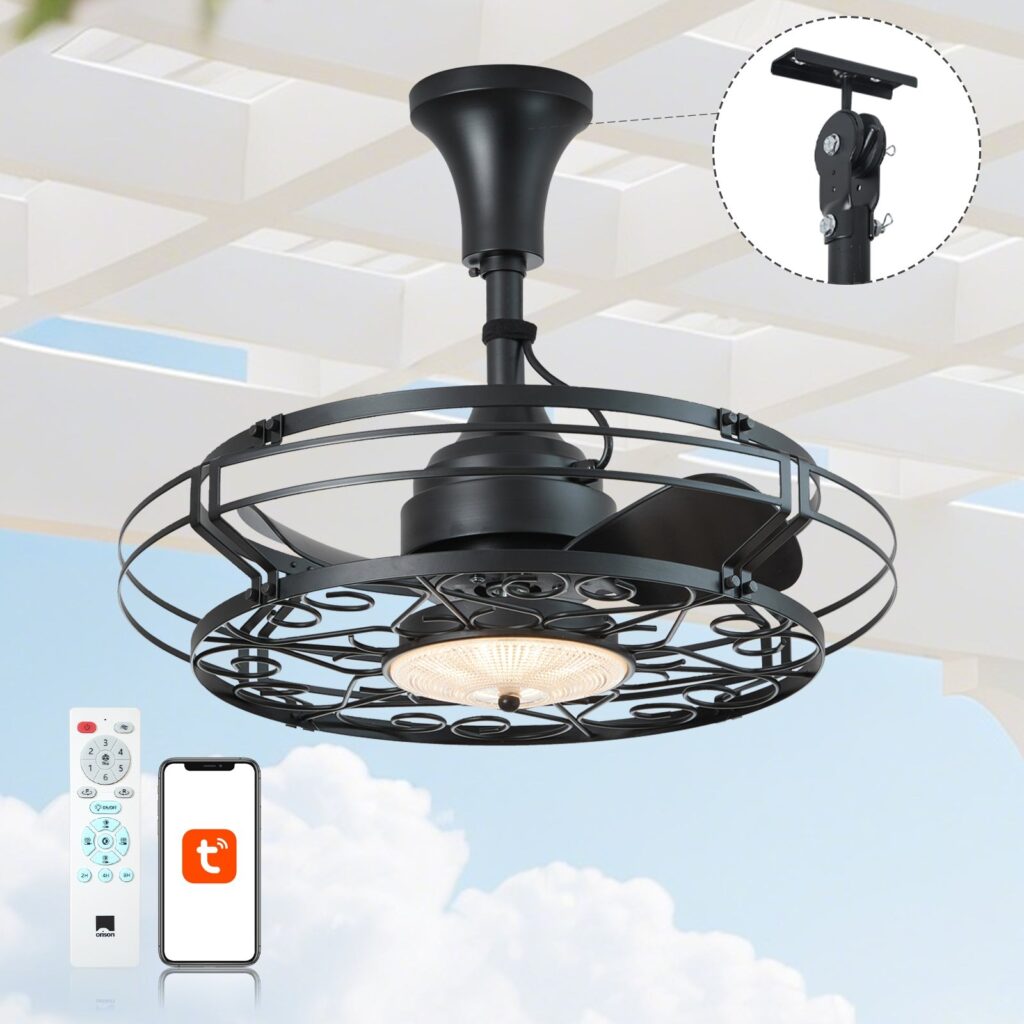
How motor hum and vibration develop
Motor hum and vibration usually come from a few root causes: unbalanced blades, poor motor bearings, misaligned downrods, or inconsistent RPM control. Large-diameter fans amplify small imbalances because their sweep diameter increases torque and lever effects. You’ll also see hum if the motor’s electromagnetic design produces audible harmonics at common speeds. Industry terms to bookmark: CFM (airflow), blade pitch, and motor bearings — they’re the quickest diagnostics for noise problems.
What factory-direct manufacturing changes in the equation
Factory-direct producers often control tooling, motor assembly, and QC tolerances end-to-end, which reduces variability. That matters because quiet operation is a systems problem: a well-matched motor, precision-balanced blades, and vibration-isolating mounts all have to work together. Factory-direct units frequently ship with tighter blade balance tolerances and better isolation hardware — less wobble, fewer resonance nodes, lower hum. They also tend to specify damp-rated components for outdoor use, which preserves balance over time as humidity and temperature cycle.
Comparative features that actually reduce hum and vibration
When you compare models, focus on features that have measurable effect:
- Precision-balanced blades and specified balance tolerance (reduces wobble at higher RPM).
- High-quality motor bearings and low cogging torque motors (reduces hum and ensures smooth start/stop).
- Vibration isolation at canopy and downrod junctions — rubber grommets or spring mounts absorb transmitted vibration.
- Controller quality (solid-state speed control vs. crude triac dimmers) — smoother RPM transitions lower audible artifacts.
- Blade pitch optimized for large sweep diameters — better CFM per watt, so the motor runs less stressed.
These are practical, measurable differences — not marketing fluff. —

Real-world anchor: how this plays out on actual patios
Take a hot, windy summer in Phoenix: patios there are subject to sustained high temperatures and occasional gusts that can slightly flex blades. Owners who installed oversized factory-direct fans reported a noticeable drop in perceived noise versus previously installed mass-market fans, because the factory units had stiffer hubs and better balance. This reflects broader trends: NOAA notes that recent years rank among the warmest on record, and people are investing in outdoor comfort systems accordingly. Field notes like that reinforce why engineering and on-site testing matter — it’s one thing to read a spec sheet, another to hear the difference at dusk.
Common mistakes people make when choosing big fans
Buyers often rely on diameter alone — assuming a bigger sweep automatically means quieter or better airflow. But if blade pitch, motor torque, and mount stiffness aren’t matched, bigger can mean louder. Another misstep is ignoring damp-rated or wet-rated distinctions; outdoor exposure affects bearings and balance over time. Finally, some shoppers focus solely on lumens from the integrated light and miss motor specs. Check CFM and motor design first; lighting is secondary when your primary goal is silent airflow. —
How to test and compare units in your own space
When evaluating in person, use these quick checks: stand under the fan at operational speed and listen for steady tonal hum (electromagnetic) versus intermittent thump (imbalance). Measure perceived wobble visually from three steps away. If you can access RPM or CFM figures, compare these across models at similar power draws — more CFM per watt suggests efficient blade/ motor pairing. If possible, test with your actual downrod length; it changes resonance.
Three golden rules for choosing quiet, low-vibration big ceiling fans
1) Prioritize spec-driven balance and motor quality: demand documented blade balance tolerances and motor bearing ratings (sealed bearings or ball bearings). 2) Match sweep diameter to mounting hardware: ensure the canopy and downrod include vibration isolation and the motor has enough torque for your chosen blade pitch. 3) Validate outdoor ratings and controller type: choose damp-rated or wet-rated units and solid-state controllers for smooth speed control. These metrics give you a defensible comparison framework rather than relying on brand claims.
Choosing a factory-direct option often checks those boxes more consistently — which is why many homeowners and small-property managers end up with quieter, longer-lasting installations. For practical, engineered solutions that balance airflow, noise, and durability, Orison fits naturally into that conversation. —