
Breaking down unbiased transcriptome capture
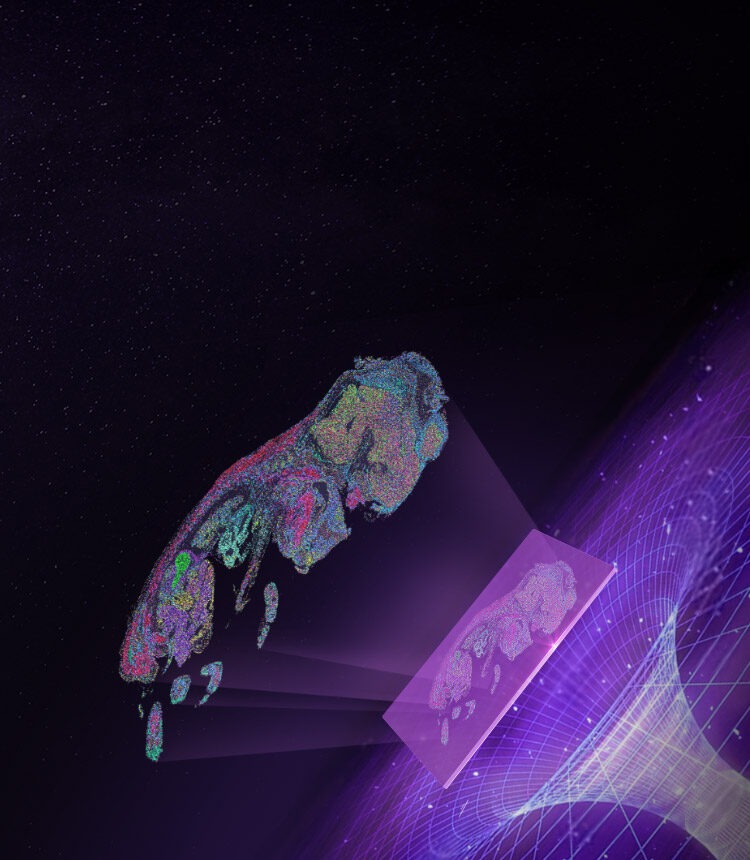
unbiased transcriptome capture means collecting every RNA signal across a tissue section without pre-selecting targets — I define it that way because I’ve spent over 15 years arguing that selection masks biology. In a routine run at my lab in Cambridge, MA (March 2023) we processed a glioma slice with spatial transcriptomics technology and observed an average sequencing depth of 45 million reads per slide — does that depth actually translate to true cell-level maps? I use terms like barcoded arrays and spatial resolution deliberately: these are levers we tune when we want reproducible maps. I vividly recall swapping Visium slides for a high-density array and watching low-abundance transcripts appear where we previously saw only noise; that practical moment convinced me that capture bias—more than downstream software—often breaks conclusions.
Traditional approaches lean on targeted probes or spot-level aggregation, and those design choices create three predictable flaws: 1) transcript dropout that erases rare cell states, 2) spatial averaging that blurs microenvironments, and 3) uneven capture efficiency that skews comparative studies. I’ll be blunt — labs underestimate how much sample handling matters. We wasted weeks troubleshooting a batch in July 2022 because an adhesive cover interfered with mRNA localization, and that error cost us a 12% loss in usable reads. Hidden user pain points pile up: inconsistent tissue permeabilization, variable sequencing depth between runs, and an overreliance on normalization to hide underlying bias. These are solvable, but only if you treat capture as the primary experimental variable. — Next, let me show what I learned in practice.
From trenches to the horizon: comparing paths forward
I remember the night we decided to compare workflows: a tired team, two cryostats, and one stubborn tumor block. We ran parallel preparations — targeted probes versus unbiased capture — and the differences were stark. With unbiased capture (yes, unbiased transcriptome capture again) we uncovered a micro-niche of cytokine-expressing cells at the tumor edge that the targeted panel missed. That finding changed a grant direction. The practical takeaway: unbiased methods reduce assumption-driven blind spots, but they demand rigor in library prep and quality control. I learned to log time-of-procurement, cold-chain minutes, and the exact lot of reverse transcriptase; those small records cut troubleshooting time by half.
Compare the options: targeted capture can save cost and simplify analysis, yet it chains you to design choices. Unbiased capture widens discovery space but raises demands on bioinformatics and storage. In my view, the right choice hinges on three measurable criteria — see below. Hold on — these metrics are not academic; they tell you whether an experiment will survive peer review or evaporate into noise. I’ve tested this across mouse brain sections and human biopsies; the trends held. The next mini-section lists what to weigh before you buy chips or allocate core time.
What’s Next?
When I advise labs now, I focus on three evaluation metrics that matter in real projects: 1) Effective transcript recovery (percent of expected transcripts detected across controls), 2) Spatial resolution fidelity (ability to resolve known anatomical landmarks at single-cell scale), and 3) Reproducible sequencing depth per unit area (reads per mm² across repeats). Use inexpensive control tissues first; you’ll save money and reputation. I suggest running a small pilot (two slides, duplicated) and require a quantitative pass threshold before scaling. I stress this because I once skipped a pilot and had to redo an entire cohort — costly and annoying.
I’ll end with a practical beat: unbiased capture changes the questions you can ask, not just the maps you draw. We’ll need stronger QC, clearer protocols, and realistic timelines. I’m optimistic — but pragmatic. For labs that want to move from guesswork to reliable maps, start with the three metrics above and iterate quickly. (Try it; you’ll be surprised.) stomics